A grading-assurance assistant for Moodle
Consistent, defensible grading — that your markers actually welcome.
Your markers grade the way they always have. When they want a second opinion, they ask Grade Confidence to check that grade against the rubric — and it surfaces the evidence behind it, so a grade that's later questioned is answered with proof, not memory.
It runs the best model on the market — and gives you the means to prove it's genuinely best for your work, benchmarked against human-graded essays. You stay in control of every grade, so the result keeps full teacher agreement: not an auto-grader, and it never tracks or scores teachers.
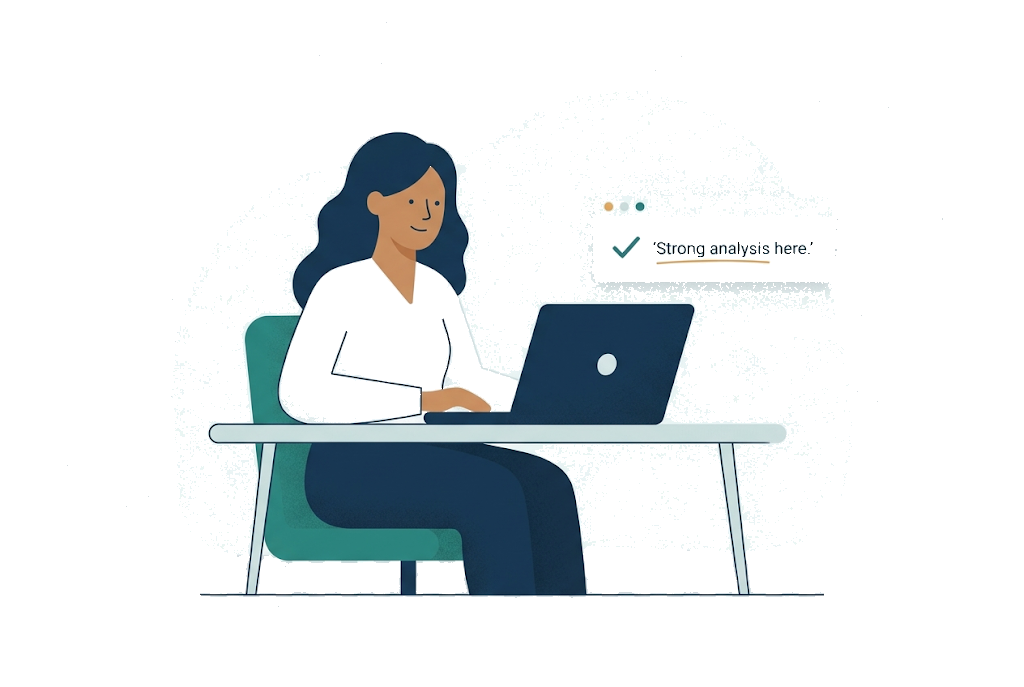
Grading drifts. The bill arrives later.
By essay #60, no one marks quite the way they did at essay #5 — that's human, not negligence. The cost shows up weeks later: a student appeals, an external examiner or auditor asks "how do you know grading was consistent and fair?", a parent disputes a result, and moderation quietly eats hours. The need is real. The trick is meeting it without making your markers feel watched.
One tool, three people who each have to say yes
A grading-assurance tool only works if it serves the person who owns the standard, the markers who use it, and the admin who installs it. Here's what each gets — and why none of them loses.
Deans, L&D leads, principals
Consistency across every marker, a defensible audit trail for appeals and external examiners, fewer disputes, and fairness evidence when a regulator or parent asks.
Your teachers & assessors
A private second look on their own work — they stay in control, students never see it, and it has no concept of "who graded": no scoreboard, no league table. So they adopt it instead of resisting it.
Your Moodle admin
Open source (GPLv3), uses the AI provider you already trust — or a local model, privacy by design, a hard per-course budget, heavily tested, and honest about being early.
See it in action
Real screens from the product, not mock-ups.
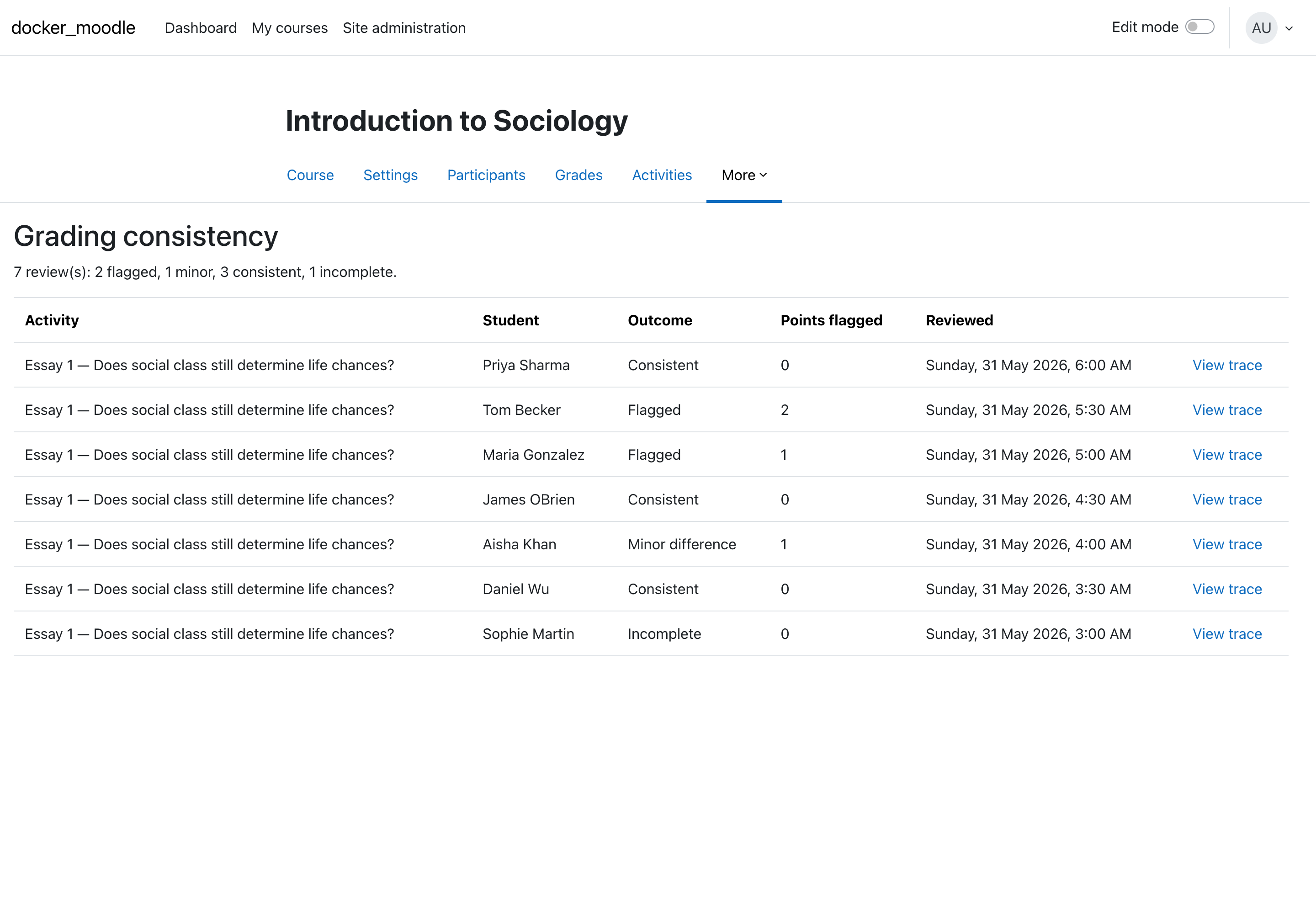
See the whole class at a glance
The consistency dashboard summarises every review in the course — which grades look consistent, which are flagged, and which couldn't be fully reviewed.
It lists grades, not teachers: there is no per-marker scoreboard.
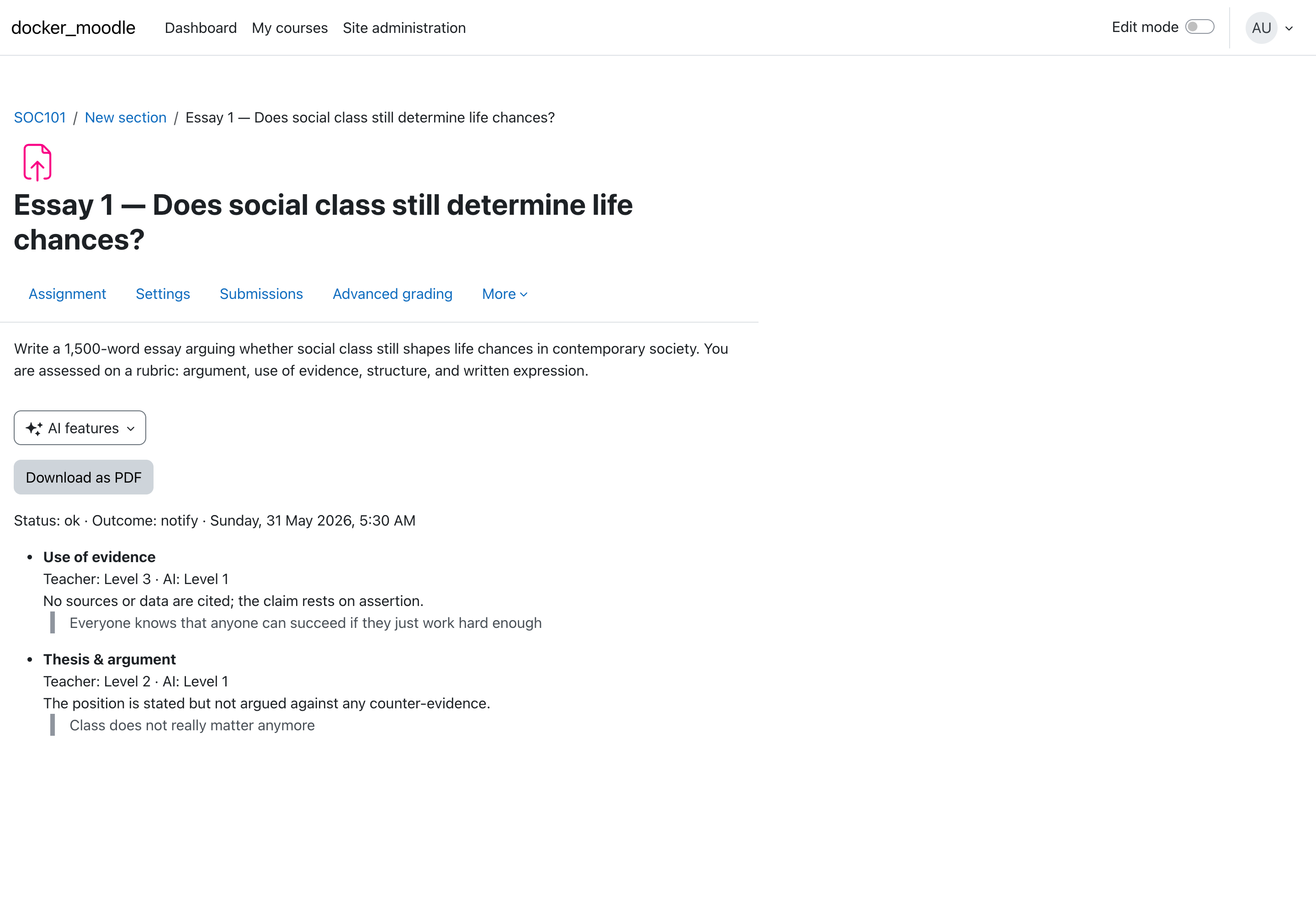
Understand exactly why a grade was flagged
Open any review to see the reasoning, criterion by criterion: the teacher's level, the AI's read, and the verbatim quote from the student's own work as the reason.
Every quote is verified to be a real substring before it's ever shown — the evidence can't be invented. One click gives you a PDF for an appeal.
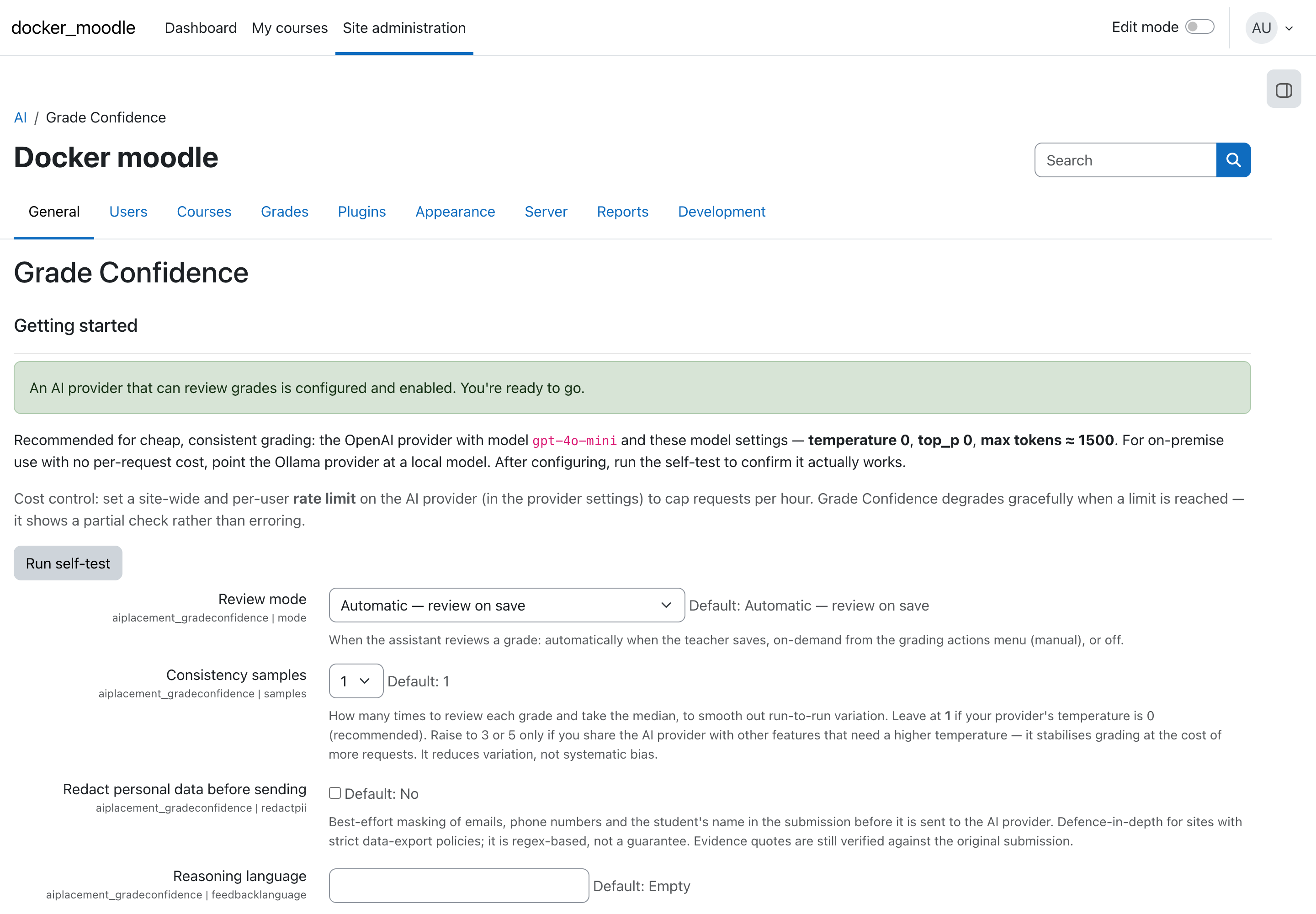
Tune it to your context
An administrator chooses how it runs — off, on demand, or automatic on grade save — plus the ESL-fair mode, a target feedback language, the cost rates, and a hard per-course budget so spend is visible and capped.
A built-in self-test checks the configured model and tells you whether it's fit for grading this kind of work — so you're never trusting a model that isn't up to it.
It works with the AI provider you already trust, or a local model for no per-mark fee.
Four worries. Four answers.
Not a black box that takes over. A quiet check that helps people defend the grades they've already made.
Catch it before it's an appeal
Inconsistencies surface while marking — not weeks later in a complaint. Moderate only the flagged cases instead of blind double-marking everything.
Best model, on demand, predictable
Because checks run only when a marker asks, each one costs a few cents — so you can afford the best model, and the plugin even tells you whether the model you've chosen is actually strong enough for the work being graded. Give each teacher a check allowance, cap spend per course, and it never runs away.
Keep the receipts
Every review leaves a reasoning trace, verified evidence, and a log — a defensible record when a grade is challenged, instead of relying on memory.
A neutral check on drift
An optional ESL-fair mode judges ideas by the rubric, not phrasing or dialect — useful evidence of fairness for regulators and parents alike.
The honest part
It's an assurance assistant, not magic. The human stays in charge — which is also the safer posture under the EU AI Act.
It's early: an alpha we're being upfront about, looking for a few real teams to pilot it and tell us the truth.
It's free and open source (GPLv3) — your admin can read every line.
On compliance, plainly: it ships student-transparency text and an EU AI Act readiness pack, but it is not certified. It supports your own compliance work; it doesn't replace your responsibility for it.

Try it on your own Moodle
It's free and open source — install it on one course, put it in front of your markers, and see for yourself. No sales process, no lock-in.
Works with Moodle assignments and quiz essay questions. Reads your existing rubric. Nothing new for students to learn.